
Text of Keynote Remarks delivered at the Africana Librarians Council’s 2026 spring meeting on April 16, 2026.
About a year ago, Kodjo and I sat somewhere in Accra with Brian Rosenblum and the KU Dean of Libraries Carol Smith. I think the discussion was something about the similar challenges of library work we had observed in Ghana. As the only non-librarian in the midst, I was happy to listen, making observations that, in fact, appeared obvious to everyone, which is to say I had little to offer, and my colleagues were being generous. This morning, while I leave the technicalities of the library craft to you experts in the room, the question I want to begin with is less technical than personal: what does it mean to travel and leave your books behind with only the faintest hope of any reunion? When I left Lagos in 2013 for doctoral studies in the cold prairies of Canada, I did not just leave the lagoon, colors and energy of the city behind. I left my library. I left hundreds of books and volumes, collected over many years, annotated in margins, marked with memories of where I had bought them, where I had read them, and what they meant to my intellectual formation.
Leaving Lagos without my books was, of course, not the preferred choice, but a decision the realities of a harsh Nigerian economy demanded. Like so many African scholars who have travelled away from their homeland for education, I had to confront what I would later call the crisis of the unpackable library. In a famous 1931 essay on his book collections, Walter Benjamin wrote beautifully about unpacking his library, describing the “chaotic memories” that overwhelm a collector when reunited with their beloved books. But Benjamin wrote from a position of eventual reunion, which invites us to reflect on those moments in which the condition of unpacking is endlessly deferred.
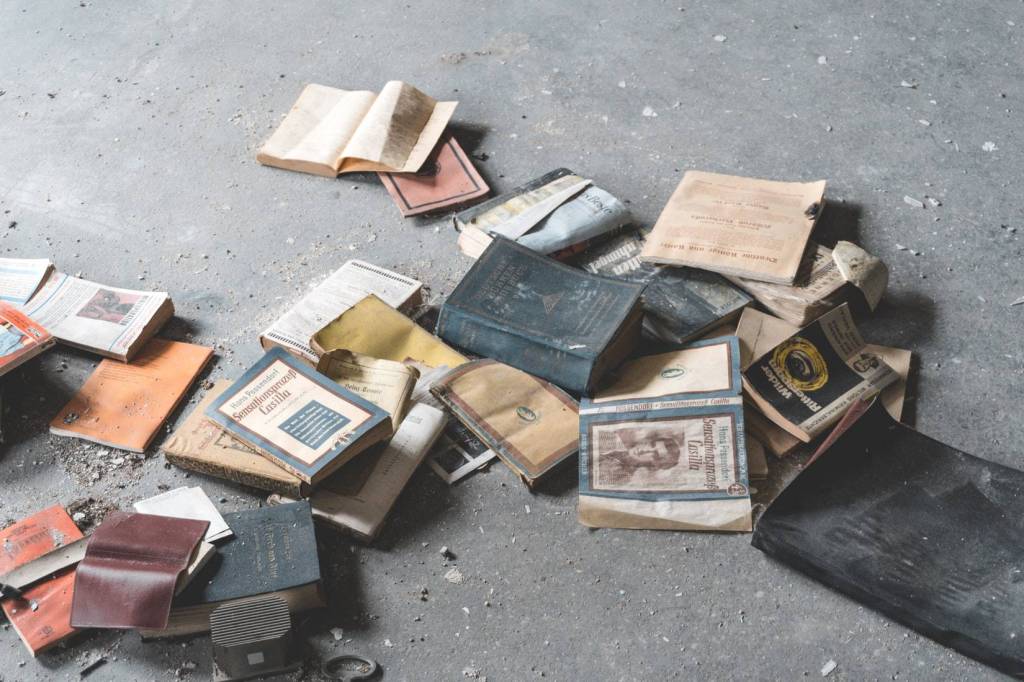
What happens when our books as physical objects of knowledge have to remain in Lagos, Accra, or Rabat, rendered precarious in some humid storage or gifted away because the cost of shipping exceeds the stipends of graduate studentship abroad? Or, what happens when African scholars must choose between survival and their personal archives? The unpackable library, with its material loss, serves as a powerful metaphor for the larger crisis of African studies in the age of AI, namely the systematic erasure and marginalization of African knowledges in the very digital infrastructures that claim to democratize access to information. And this is the focus of my remarks today.
I want to sit with these questions because they are not simply subjective queries about the anguish of abandoned personal libraries, but they are professional questions that many of us are familiar with in different contexts. And in 2026, with AI systems being trained on datasets that reflect precisely these histories of departure, loss and archival neglect, these are also urgent problems, having deeply political stakes,
I speak to you today, therefore, as a collector who, at some point in my journey, could not collect all the books I had acquired, and as a scholar whose library is in two places and, therefore, in a symbolic sense, in neither of those places. And I address you as experts who have dedicated your professional lives to the very challenge I am describing – the problem of what survives as knowledge, what enters the intellectual record, and what gets valued for cataloguing and digital preservation. Because the crisis of the unpackable library is much intensified with the entry of Large Language Models into the informational landscape, this topic is relevant today.
So, how does a library become unpackable? Sometimes, an immigrant scholar must confront economic logics that impose choices on their quest for knowledge outside their homeland. Their book collection in the new location is almost never complete, with their library constantly vulnerable to absence, and to the archive that was never packed. We want to travel light, or we promise ourselves to retrieve our books later, but only a few of us get the opportunity to return home after our studies, never reclaiming what the Nigerian sociologist Ebenezer Obadare calls “a library languishing” somewhere else.
Benjamin’s observation that the acquisition of books is by no means a matter of money is fair, but I also think there is a class dimension to book buying and the ability to transport hundreds of books to new distant locations. To put it simply, our libraries are unpackable because of the forces of capital, something to which the bourgeois class may be impervious. Benjamin is right, though, that “the phenomenon of collecting loses its meaning as it loses its personal owner,” in this case, as it loses its African owner to another location. In the real sense of things, the libraries we left, and which appear to have left us, remain as past traces of our present intellectual engagements. They emerge as the symbolic objects of our disconnection from a home that, as the Somali-British poet Warsan Shire renders it, is “the mouth of a shark,” “the barrel of a gun.” Every act of packing and unpacking we perform anew in our latest location bears traces of a past habit of collecting – signs of the collection that was unpackable. To inquire about the significance of the African academic’s travels and the meanings encoded in their book collection is to demand answers the archive was never designed to provide. And now we pose the same questions in an era when that same archive, with its loud silences and gaps, is the training data for machines indifferent to the nuance and granularity of African ways of knowing.
There is a deeper problem underneath the personal question of leaving our collections behind in Africa, though. We are invited to ask, for instance, why African intellectuals even leave their countries in the first place. One of several answers may be the relationship of many people to knowledge as symbolized by books themselves or their lack in different places on the continent.
Until recently, it was constantly observed that books written about Africa were sometimes not available in most African libraries. It makes sense, then, that some of the best African thinkers are pushed away by a culture that misrecognizes the value of books; this is a culture that is increasingly unfair to books, and to the book culture that molded an earlier generation of anticolonial and postcolonial African intellectuals. Even the idea of a public library or an institutional archive, as supposedly critical infrastructures of knowledge and memory, are anchored on weak systems, lacking support from the political class. This is why it was easy in 2018 for the French journalist Caroline Broué, to ask Chimamanda Adichie in Paris whether bookstores even exist at all in Nigeria.
Despite Nigeria’s national library, its actual impact on the country’s sociopolitical landscape remains questionable. And this is not only a Nigerian problem; it is a continental issue, which is deeply historical, and rooted in the colonial policies that built archives to serve extraction rather than communities and which determined what could be valued as knowledge and what could not. It goes without saying, then, that the physical library and archive were already disadvantaged, their materials endangered, and, of course, you know that this process did not happen accidentally. It was organic and structural, the outcome of historically deliberate decisions about whose knowledge was worth preserving.
With the work of scholarship in the age of digital reproduction, these silences and absences become amplified. It is a good thing that some libraries and archives are digitizing their holdings, and here I can think of the defiant work of recovery at the Nketiah Archives at the University of Ghana, or the work of the African digital heritage in Nairobi, as well as other digital initiatives across the continent. At the same time, many African institutional collections, especially repositories of African-language materials remain undigitized, with much oral tradition and indigenous knowledge invisible to today’s AI infrastructure.
Yet, as the unpackable library migrates into the digital age, carrying all of its absence with it, it is necessary to signal how the digitization of the African archive makes it vulnerable to extractive AI practices and platform capitalism; Here is a paradox we have to live with. On the one hand, the lack of digitization means the African library is not machine-readable; on the other hand, to digitize it means AI companies can access and scrape it in a capitalist maneuver that undermines African data sovereignty. Although hinted earlier, we may extend this observation more fully into the digital present, and specifically into the moment we are now in — a moment in which AI systems are being trained on data of almost incomprehensible scale, and deployed as though they represented the full spectrum of human knowledge. Without being a minor epistemological gap, these sociotechnical systems learn from what was digitized, and never from what is not there. It is now well established that African languages, in their oral and written forms, as well as their distinct literary, philosophical and intellectual traditions, are hardly represented in the training data of most large AI models. This has huge epistemic implications, given the massive amount of data that has not been transcribed, as well as the community knowledge that has not been digitized. In fact, a grim picture emerges when you consider the personal libraries and private collections of diaspora scholars whose books are still on dusty shelves in Lagos, Kumasi or Kampala, waiting for an owner who may never return.
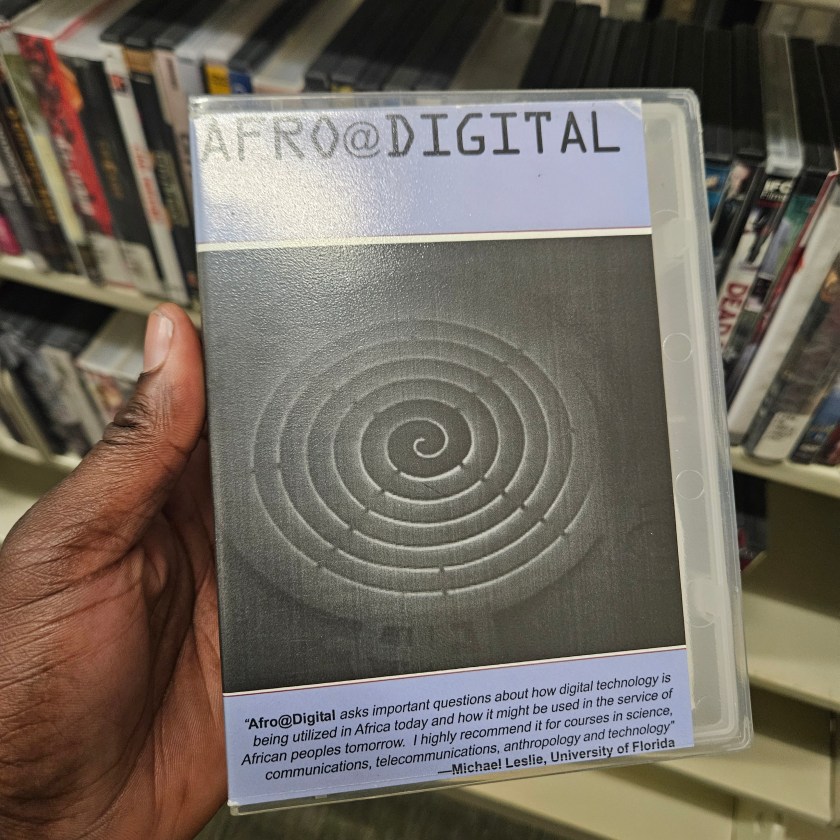
When an AI system is asked to speak to African culture and history, it draws on a dataset that privileges and reinscribes the Western intellectual heritage that constitutes its very ontology. When it is asked to generate text in Kikuyu or Twi, its underrepresentation of these marginalized lingustic contexts becomes visible. Rather than the fundamental details of these languages and their histories, what it generates is a simulacrum of reality, with the silence of the AI archive not just a mere shadow, but a replacement that distorts Africa. African history in today’s AI systems becomes unwanted hallucinations in the mouth of new digital platforms speaking the old languages of colonial technologies. Disturbingly, the most dangerous thing about this reality is not that the model is always wrong when it writes Africa; rather it is that the AI assemblage hardly comprehends the limits of its own knowledge, not knowing it is wrong and generating information that excludes a significant part of the African archive. I may be well aware of what is missing in my collection because of my unpackable library, but the most authoritative language models are designed to obscure their ignorance.
To put it in the Adichiean sense, the AI library on Africa exemplifies the danger of a single story. As Adichie explains, the power of the single story is not that it is wrong; it is that an incomplete story becomes the definitive story of an individual or group. A model trained on incomplete data cannot identify its own incompleteness, offering answers with equal authority whether drawing on a rich corpus or an incomplete one. To acknowledge that what it has generated is an approximation built from an accumulated body of intellectual gaps is to work against its own epistemic protocol. Rather than a systemic breach, this single story is the natural outcome of building AI systems on data sources derived from what Mudimbe trenchantly calls the colonial library and its invention of Africa. And it means that unless deliberate and corrective ethical work is undertaken, both at the level of collection and digitization, as well as at the level of metadata development and community partnership, these systems will continue to reproduce the marginalization of African knowledge at a speed and scale unprecedented in previous technology. Indeed, if the unpackable libraries of the AI landscape are never complete, to unpack the library has to be seen beyond a symbolic ritual of remembrance and performative re-identification with the books we love. It is a political act, since what we failed to unpack and the knowledge we left behind, the books we never catalogued or made machine-readable, revive problematic intellectual histories that rehash a persistent image of Africa as the antithesis of the rational world.
As I bring these remarks to a close, we must face the hard realities and understand that we may buy new books and replace old ones, but the libraries we have left still speak across the Atlantic. They whisper the necessity of becoming knowledge societies that take technological transformations seriously. This work cannot remain trapped in the private realm, even if that is where the most innovative African labor currently lives. As private, informal and community archival and library work intensifies on the continent, they remind us of the failures of the political class that do not value this kind of work, including the weight of postcolonial memories. I mention these private initiatives lest the discussion elide the ongoing work of various African digital actors, such as Masakhane, which promotes grassroots NLP for African languages, and Archivi.ng, which focuses on historical preservation in Nigeria.
Many of you may understand this as well. In your professional capacity as African studies librarians working in the United States, you are custodians of two different layers of libraries and archives. You work within an American institutional infrastructure that has its own preservation mandates, cataloguing standards and, frankly, its own priorities, yet you have also chosen, by virtue of your field, to take responsibility for a body of knowledge that some of your colleagues and administrators do not fully understand and do not always evaluate effectively. You spend time justifying the relevance of your Africana library work to institutional heads withholding funding, with some of you carrying that responsibility from lived experiences and proximity to these intellectual heritage and traditions; others have come to it through the rigorous scholarly and professional commitments that define your work.
Either way, what this position gives you in a most unique manner is the capacity to identify what is missing and absent from the physical collections in our libraries, as well as what is erased from the cultural record that now dominate AI platforms. Many of you know which languages are absent from the training corpus, and which community archives are still unknown to many digitization initiatives. You can help reclaim what has been left behind, particularly in the sense of advocating for its digital recovery and preservation and facilitating its meaningful inclusion in the record on which AI is being trained today. I am not suggesting there are easy answers or any tidy solution. But every collection effort and metadata development decision you make, every argument for why your institution should fund digitization of African-language materials or collect more African materials are arguments about what AI systems should know, not just for the African present but for future moments. Things like cataloguing standards must, therefore, be seen for what they are as sites of epistemic struggle and politics. The same can be said of the metadata often attached to digitized African materials, which forms a significant part of what AI systems use to understand the African context. On the assumption that bad metadata ultimately produces bad outputs, advocating for culturally informed cataloguing and metadata schemas is insisting on better AI models.
For us to make the knowledge from our African networks part of current computational systems requires us to build even more organic relationships and have a willingness to let communities determine the terms of their own representation in the digital record. In line with its extraction of labor, OpenAI might be more interested in precarious wages for content moderators in Africa than in building these relationships, but the work of meaningful, community-accountable digital preservation belongs to African studies librarians, archivists, and scholars of professional standing and the scholarly seriousness to insist on something accountable and ethical. We may say that unpacking never ends, and that we never can truly unpack a library that was never indeed packable. But with AI, the ethical thing is to unpack the erasures and silences of these advanced technologies, knowing that this is not just a matter of speculative futurity. If AI is writing Africa out of the present, we must seize today as the moment of resistance.
Finally, those of us whose libraries are still unpacked in Nigeria will probably gift once-prized possessions to an institutional library eventually; for now, we must continue to contemplate how our books must be unpacked. This story is that of every African scholar who departed without their archive, and those of every community whose knowledge is yet to enter the digital ecosystem. I know that libraries, whether culturally informed and digitally sovereign or not, are never truly complete. Yet, we must build the African library in an AI age with the full awareness that what we preserve, and what we allow to remain unpreserved, is never a neutral act. When Kodjo, Brian, Carol, and I sat in Accra a year ago, I was a silent observer of your craft. But today, I see that our work is the same, which is to reclaim the archive that was never packed for a sophisticated digital age, and to finally begin the long journey to a home that is not the mouth of a shark.





 James Yékú