Social Media Banter, Jollof Rice and Other AFCON Delicacies

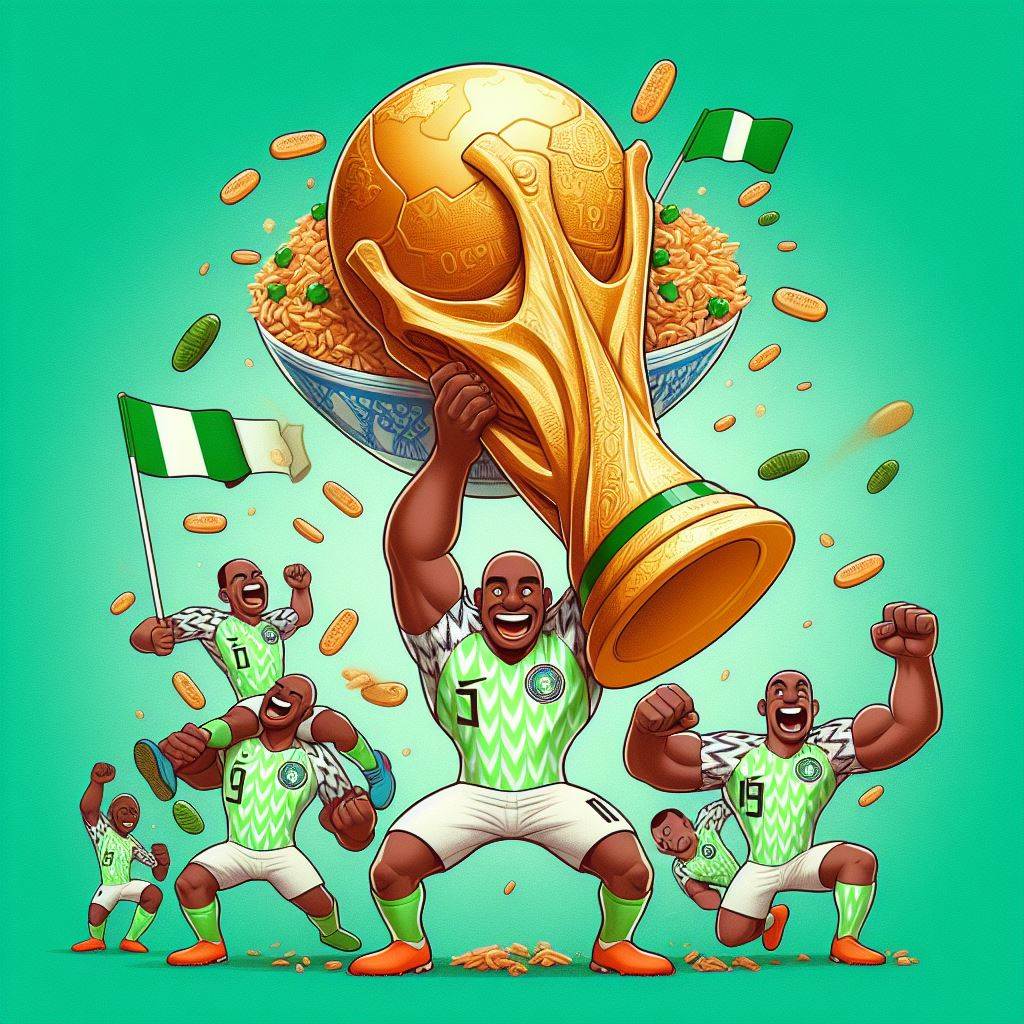
According to one urban legend, any party without Jollof Rice is just a meeting, but on social media, it matters significantly whether that Jollof is of Nigerian or Ghanaian origins.

It certainly does for some AFCON supporters at this year’s tournament whose vociferous performance of AFCON fandom has been a little more intense than in previous editions of the biennial tourney, not with the gastropolitical dimensions of the perennial social media jousts and banter over Jollof Rice and with the ongoing competition in Ivory Coast in mind, other tantalizing delicacies.

For the initiated, and those familiar with online social relations between Nigeria and Ghana, the Jollof Rice rivalry, the popular tomato-sauced, orangey rice dish originally of the Senegambian Wolof, may have become tiring, but after Nigeria’s win over Angola in the first of four intriguing Quarterfinal matches in Ivory Coast last week, attention on social media turned to another delicacy, the antelope meat.

If you are wondering, all this makes sense with the AFCON participation of Angola, a country on the coast of Southern Africa. Angola’s national team, fondly referred to as the Palancas Negras—meaning the giant sable antelope, surprised many as they came out tops in a group comprising two of the ten best-ranked teams in Africa, Algeria, and Burkina Faso; but the sable antelopes quickly became a staple of online memes and banter among Nigerian fans when they faced the Super Eagles.

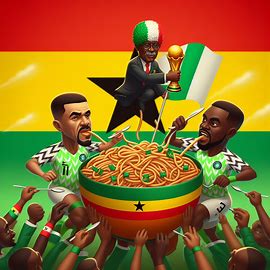
When an Angolan X account posted “Bring Them On” in response to the confirmed fixture between the Palancas Negras and the Super Eagles at the end of the second round of matches, what followed was a sea of comments by many of Angola supporters mocking Nigeria’s bluntness in front of goal, something the Angolan team up to that point had done well in Ivory Coast. The official X handle of DStv in Angola went as far as using AI-generated images to tease Nigeria’s Victor Osimhen. The Napoli striker had scored only a single goal in 4 games while Angola’s Gelson Dala had 4 goals already.

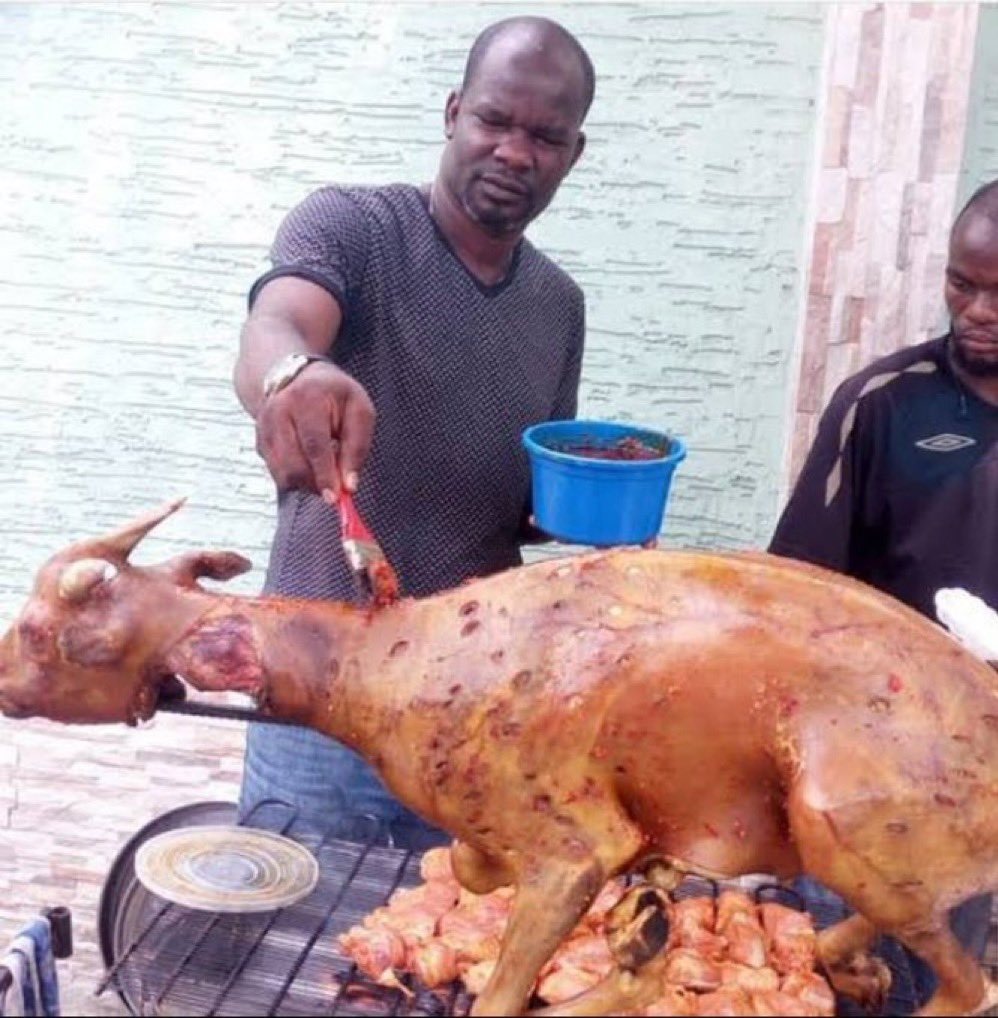
With a Nigerian victory guaranteed after Ademola Lookman’s delicious first-half goal, the Nigerian handle of DStv saw an opportune moment for revenge, as the large Nigerian contingent online immediately responded with a torrent of tweets as a tongue-in-cheek clap-back against their opponents. As one Nigerian X user suggested, it was time to have Ghana Jollof with Antelope meat sprinkled with Cameroon pepper. Other variations of this sentiment flooded the internet.

Anyone who has followed the matches in Ivory Coast can appreciate the reference to Cameroun and Angola in the context of Nigeria’s victories at AFCON. The allusion to Ghana is a bit odd except, of course, if before the match with Angola, you were a Ghanaian fan who had imagined an encounter that excites with schadenfreude. Taking aim at a squashed Ghanaian pleasure in Nigerian misfortune, the banter over Jollof Rice were predictably back at the table.

For the Nigerian, therefore, to have “Ghana Jollof” that is made with Cameroonian pepper and Angola venison offered an ironic reluctance to accept the inferiority of Nigerian Jollof to mock their West African brothers and Ghana’s early ouster from the 2024 AFCON.

And the jokes, memes, and teasing are not just a fan affair, as some players join in the conversation and take the game to a different level through their amusing performance of elite pettiness. Beyer Leverkusen’s Victor Boniface, who departed the Nigerian camp after picking up one of a string of injuries that hit the Nigerian camp just before the start of the games is at the heart of some of these jokes. Responding to a Ghanaian YouTube personality and content creator Kwadwo Sheldon who said in a video that Ghanaians “can’t allow Nigerians to win #AFCON” because Nigeria already dominates Afrobeats and keeps dragging Jollof Rice with Ghana, Boniface fired back, mocking the Ghanaian team: “your mate dey semifinal, you dey drag joffof [Jollof] rice.”

All this matters not because the social media banter is a front for a more insidious backstory of subtle bigotry. Food and sports might be cultural systems, but the mixture of the two in the field of playful mockeries entices other symbolic meanings. The anthropologist Arjun Appadurai has since called food a system of “gastro-politics,” referring to the conflict over specific cultural or economic resources as it emerges in social transactions around food. If the Cameroonian expression, “politics of the belly” is relevant to scholars like Jean-François Bayart who try to understand patron-client relations in postcolonial African states, this year’s AFCON makes it more relevant both on and off the pitch, with social media the perfect battleground for its recruitment into the conviviality of soccer fandom online.

Hence, content creators using TikTok and X to share humorous posts about cultural dishes as a means of participating in soccer banter are, in fact, unbeknownst to them, engaged in broader political conversations. For example, while acknowledging the Nigerian noise over the Super Eagles wins, some fans from Ghana keep reminding Nigerians that cities such as Accra and Legon have constant electricity to watch the AFCON matches, something that cannot be said of Lagos and Abuja. Recruiting the politics of infrastructure—both in terms of its presence and lack—is telling and reminds us that these online battles embed other meanings beyond the memesphere.

Or how does one explain the tweet by a Nigerian fan who wrote: “Angolans, pack your bags. There’s only room for one corrupt oil-producing country in this tournament and that’s us”? If you’re a psychologist or linguist, you might appreciate the cultural value and pragmatics of bantering as a friendly, enjoyable mode of conversation where people make jokes and funny remarks about each other, but if you are a Nigerian or Ghanaian fan on social media, the stakes are higher.

Of course, some may suggest that the banter and friendly insults, aside from encouraging unhealthy enmity, are as unwholesome as the other distracting mechanisms that divert from the actual material conditions of existence in these countries. The proponents of such a view on sports more generally, which is rooted in the Classical leisure and entertainment spectacles of the Greco-Roman ruling class, may even hold that sporting pleasures and social media are ideological affordances of the powerful, which blind people to their actual conditions, the impoverished circumstances of everyday people.

Of course, sport is a complex terrain of the political, and that’s precisely the point, but these criticisms also miss the larger picture sometimes, given that sports also unify and often become recruited to fight systemic power. It goes without saying that social media banter serves to uncover the bonds and commonalities between countries like Nigeria and Ghana. However, we cannot rule out the possibility that they might spill over into violence.

Because there’s always that tension bubbling under the surface of online banter, the participants in these conversations definitely know that repartees and chitchats transcend the space of the online world, entering into concrete spaces in which they structure events.

One Sir Dickson even asked Nigerian online fans to respect themselves, writing that if “we get to play South Africa [as indeed the AFCON Semis played out], please respect yourself and drag Ghana. We are not bantering South Africa. It is the Haters Cup and South Africans take the hate to the street.” To be clear, the online rivalry between Nigeria and South Africa, recently exacerbated over Western misattribution of the latter’s Amapiano music to Nigeria, manifests in other contexts, but football generally tends to amplify things.

Some have called it the Amapiano derby for good reasons, but it appears even the culture of bantering and memes this year will have some limits, given South Africa’s recent history of xenophobia. Thankfully, the Ghanaians are still in the games and can be easily picked upon. And that was exactly what happened after the Super Eagles defeated the boys from the Rainbow Nation.

As that victory was described online, South Africa might have run away with the inaugural Grammy African category but Amapiano, through that win, had become Nigeria’s, becoming blaring tunes as Nigerian Jollof warriors took their Ghanain mates to the cleaners.

Indeed, cooking and becoming cooked online could easily be the theme of the 2024 AFCON, as food and the language of the kitchen came to designate the bantering that accompanies online soccer fandom in recent years. Ultimately, it highlights the various pleasures of a tournament that, more than the FIFA World Cup itself, means so much to fans, journalists and the players themselves.

And the many pleasures of Jollof, whether of Nigerian or Ghanaian provenance remain in the mix. Sheldon’s appeal to Ghanaians to stop Nigerians from going all the way to the final might have failed but it tells you there remained some fans in Accra on the touchline waiting to cook their Lagosian brothers if Nigeria does not win the AFCON in 2024. The problem, as Sheldon, donning a Super Eagles jersey, diagnosed in his post-match analyses after the semis, was that Nigeria’s battering culture is often frontloaded with bewildering self-deprecations. How can you effectively bant someone who already gleefully airs their dirty linens to everyone on Facebook?

Ghana may not be playing in Sunday’s epic final between Nigeria and a resurgent home country that found its momentum after rising from the ashes, but they continue to offer so much online that complements proceedings on the field. And their Jollof Rice remains one that can never be cancelled. Neither by VAR nor by their noisy neighbours.  In the meantime, Nigerian fans might not have been able to tolerate the taste of Alloco and Attiéké, but they did expect their Eagles to address the Elephants in the AFCON room. Unfortunately for them, it was the Ivorians that dispatched a lacklustre Nigerian team, with the Ghanaians having the final laugh.

A slightly different version of this article first appeared on Soccernet

Brymo, Roland Barthes, and the Nigerian Author That is Not Dead

As of the second week of November in 2023, there was only one YouTube comment on a talk, “Brymo, Cultural Neo Traditionalism and Postcolonial Aesthetics” given by the Nigerian scholar Adeshina Afolayan. Posted on Emory Institute of African Studies’ official YouTube page, this comment illustrates the unrelenting thoughtlessness with which social media is used around the world. For some inexplicable reason, for example, around the same time as the comment to the Brymo lecture, the UK Guardian deleted a published version of Osama Bin Ladin’s “Letter to America” after some TikTokers discovered it and essentially ran with it to justify their condemnation of the US’s cosiness with Israel and the latter’s injustices in Gaza.

While anyone might overlook the normal frenzied desire for user engagements that motivates the sensational labors of online content creators, it is the mindless redemption of Bin Laden you may find most irksome. More perplexing is also the reasoning that even if it harms civilians, terrorism could become recruitable as a legitimate form of resistance to a dominant system.

If you are a teacher of popular culture like me, you might frown at any elitist dismissal of TikTok cultures as always already juvenile and prone to algorithmic manipulations. However, we might be able to agree that college professors in the United States need to be more pedagogically committed to keeping their powder dry with regard to the state of critical thinking skills among our students. Their country’s complicity in the Middle East is well documented and they certainly do not require an infamous missive posted without the proper context on TikTok to condemn its violent history.

Yet the thoughtlessness of the social media age is not something you find only among American Gen Zers and millennials; if you look well enough, you can easily spot it anywhere the fecundity of the mind surrenders impishly to the power of thumbs clacking away on the boards and screen worlds of platform capitalism. Like the online supporters of the Nigerian musician whose celebrity outweighed the facts of his dreadful misreading of a philosopher’s essay. Here is the actual story after all that digression: let us get back to it.

It so happened that Afolayan, an African philosopher who at the time was a fellow at the National Humanities Center in Durham, had been invited to give a talk at Emory, and he opted to speak about the work of Nigerian singer and songwriter Olawale Ibrahim Ashimi (stage name, Brymo). If you recall Biyi Bandele’s Netflix adaptation of Wole Soyinka’s historical drama “Death and the King’s Horseman,” you may have encountered Brymo in the role of the Praise Singer to the king’s horseman— a hedonistic chief whose duty to his community and a departed king is undermined by the failures of personal weakness.

In addition to the merits of his many works, Brymo’s commanding role as Olohun-Iyo is a tribute to the performer’s salt-like voice which, as Soyinka might agree, often belongs to the best praise singers and bards of some Nigerian royal courts. In both Afolayan’s essay and the Emory presentation, he analyzes Brymo’s Yorùbá songs to unpack how the musician’s songs exemplify the social and political value of aesthetics in postcolonial Nigeria. In the YouTube video, what one sees of the reception of the talk by those in the lecture room suggests Afolayan’s talk was very well received, a fact that speaks to his solid expertise in the intersections of philosophy and popular cultures.

As I understand what transpired later, Brymo got to know about Afolayan’s talk and rather than become flattered by Afolayan’s seemingly celebratory even if critical gesture towards his music, the matter became a social media contestation over one of the most influential theoretical formulations in French literary criticism, from the essay “The Death of the Author.”

Written by the semiotician and critic Roland Barthes in 1968, the concept gets to the core of textual interpretations, asking us to consider whether meaning-making derives from an author’s intentions or a reader’s interpretative power and affordances. For Barthes and other French thinkers working in his generation’s post-structuralist tradition, there is nothing outside of the text, no outside textual authority to dictate the parameters of meaning for readers. This was one of the theoretical anchors of an essay in which Afolayan similarly engages other ideas including Kwame Appiah’s postcolonial reading of the famous artwork Yoruba Man with a Bicycle, a sculpture that also fascinated the novelist James Baldwin at some point.

The age of high theory may be long gone, but Afolayan decisively relied on a reading of Brymo’s songs that imagined the symbolic death of the musician as the necessary removal of the writing body (or the performer, in this case) from the original point of enunciation. As Barthes argues, to give “a text an author is to impose a limit on that text.” But Brymo would have none of this, as he came down heavily in a Twitter (X) broadcast on his fellow Nigerian, claiming the Emory lecture “attempted negotiating my fate, and to foist on me a legacy for the price of an early demise.” In other words, Brymo incorrectly interpreted Afolayan’s theoretical reference to Barthes as an assumption of an actual death. He saw Afolayan’s Emory presentation as one of those attempts where “someone wishes me dead.” The musician probably has real enemies, especially after he went viral during Nigeria’s last elections for what many people saw as prejudicial remarks against a particular ethnic group in Nigeria.

In an industry where the fans of rival Afrobeats singers have declared him ‘dead’ in many ways, his refusal of death of any kind is understandable. But, again, this resistance to a death reference in an otherwise benign academic essay may be read as an anxiety over irrelevance in the music industry. And if there’s such an anxiety, Afolayan’s intellectual effort was a kind of symbolic resurrection that was disparaged by the ego.

As I poured over WhatsApp messages and Twitter comments mainly by Brymo and his followers, it became clear that Afolayan had been misread and his private attempts to correct an artist who cared little for literary theory would prove abortive. Even when Afolayan, as the scholar tells me, sent him messages to clarify the matter, they were met with hubristic indifference. Indeed, Brymo doubled down on his mistranslation of the essay and saw Afolayan’s attempt to explain he had not bothered about interviewing him because of the assumed Barthesian logic, this was read explained away as gaslighting.

In the world of celebrity culture, Brymo’s argument naturally wins the day, producing another nail in the coffin of whatever remains of high theory. But how do you make concepts like Barthes’s legible to a social media audience that refuses to think, or an online multitude that resurrects and rehabilitates someone like Bin Laden? Even if I say so, that question indexes troubling attitudes to knowledge in online spaces. To Brymo’s Nigerian fans, the musician, rather than the teacher, was naturally more credible, something we find in that lone comment on YouTube, as the writer unequivocally asked: “why will you assume a living man is dead because you don’t have access to him?” Another Twitter fan of Brymo’s thought the Emory lecture was “insightful [but] I feel the Prof should have contacted the artist to actually understand his art. The reference to the artist as “dead” is outrageous! In this, the outrage culture of social media dutifully manifests itself. Afolayan is lucky not to be cancelled, a fate that could have befallen him had he the influence and social capital of Brymo himself.

Like Brymo, some of these fans probably knew nothing about Barthes until their Afolayan encounter, but not even Google could redeem their ignorance. Brymo, who is expected to speak at one of the most prestigious literary festivals in Africa – the Aké Arts and Book Festival founded by writer Lola Shoneyin, ought to know better than attack a scholar who generously places his sonic art at the center of critical reflections. I may not be able to hide my love for his music, but I cannot justify the refusal to learn and think, not after your main interlocutor points you in the direction of materials to update your knowledge. In an age of information surfeit on the internet, the paradoxical surplus of closed minds has to be alarming.

At the same time, beyond the imperfections of celebrity culture and the thoughtless production of cultural content on social media, we cannot miss what the whole episode signifies for the very nature of authorship and reading practices. In the age of social media, a little learning is easily inflated, and the expertise of established voices is easily impugned especially by those who refuse to think. The production of culture in the hands of unthinking readers has to be precarious.

Game on, Nollywood! On Aki and Pawpaw Epic Run

Aki and Pawpaw’s epic run in the first Nollywood-inspired game expands the scope of African popular culture and its convergence with digital media.

Yet another textual form produced by the impact of digital media on Nollywood films is the videogame. I have already discussed previously in my book Cultural Netizenship how internet memes, GIFs and other aesthetics of social media aesthetics demonstrate an intermedial convergence between Nollywood and other media assemblages. The point of that earlier work is basically to think about how platform culture shapes the ontologies of African popular arts. You know Nollywood is a global brand not only because its best films now travel to major film festivals around the world but also because its images and scenes consolidate their famed entrance into the flow of global media culture through its unabating supply of internet memes and narratives.

But beyond the transnational opportunities streaming platforms like Netflix now provide people around the world to consume Nollywood films, there is also the visibility of Nigerian films among a playful commentariat on the internet some of whom rely on Aki and Pawpaw memes for their everyday online communication. With real names Osita Iheme and Chinedu Ikedieze, Aki and Pawpaw are two diminutive actors who often played children characters in Nollywood movies many years ago.

For those of us who grew up watching the home videos of the 2000s, the story of two rascally boys who were essentially a menace to their community was quite a filmic encounter not to be forgotten. I am talking specifically about the 2002 comic film Akin na Ukwa in which Aki and Pawpaw were first introduced. Two decades later, a remake of this movie, eponymously titled Aki and Pawpaw began streaming on Netflix, with both troublesome brothers relocating to Lagos and angling for social media fame after meeting a dishonest online influencer who profits off of their talents.

With a new mobile game featuring both Nigerian actors becoming available on Google Play stores in the first quarter of 2023, Nollywood’s convergence with other media forms, it appears, continues to bear the distinctive marks of Aki and Pawpaw. Developed by Blueportal the first Nollywood-based mobile game, Aki and Pawpaw Epic Run mimics the aesthetics and goals of popular running games (like Temple Run), as the main player runs away from trouble using mainly either Aki or Pawpaw as avatars.

To gain points, they overcome challenges throughout the duration of gameplay while encountering different obstacles that hinder their escape. The gamer runs to avoid several assailants including a street vendor, a street urchin, and a masquerade. But, curiously, its message appears to be that something nefarious in Lagos keeps you endlessly running and panting. Even a masquerade, an otherwise significant symbol of African religious traditions and cultural performances, is problematically presented as a danger from which one must flee. A certain demonization of indigenous aesthetics animates the plot of the game, it seems. At this thematic level, the game can immediately be imagined as extending Nollywood’s abiding fascination with urban processes, especially in the city of Lagos. While the game is fascinating for its exploration of urban locations in Nigeria, that it articulates a particular, troubling image of the city aligns with Nollywood’s atypical portrayal of stereotypic narratives about everyday life in Nigeria as a hellish experience to avoid. It is like the game is bent on presenting Lagos as, to use the title of Nigerian novelist Toni Kan, a carnivorous city that devours people through crime and violence. There are, of course, many troubling realities in Lagos and other urban spaces in Nigeria, but that is just one aspect of the narrative.

We can look past this dimension of the game and commend its developers for reminding potential consumers that people play in Africa. At the same time, one also gets the sense that it ironically undercuts an African agency by depicting the experiences of its Nigerian characters as people constrained by tales of woes and troubles from which they have to escape. I can’t but think Aki and Pawpaw, like many in Nigeria today, would japa and leave the country if they could.

But these contradictions also generate the game’s promises as a valid expression of African popular culture. Video games as digital genres work as interactive and alternative digital objects intended through their design and aesthetics to convey specific narrative experiences based on user interactions. There are many creators of video games in Africa that present visual narratives which open aesthetic windows into the African predicament. From multiplayer games on Boko Haram to games that portray African farming practices, the video game is a significant aspect of digital culture in Africa and we need to do more to ingratiate ourselves as scholars to the scholarly provocations it activates.

Besides being an important aspect of a culture industry that is yet to be fully theorized in the Africanist context, it is an excellent instantiation of how new digital objects build on the mobile phone revolution in Africa to document and express quotidian realities. Here, I can think of another Nigerian mobile game Sambisa Assault, created by Chopup, a company that promises to give the world games that tell the African narrative. The combat game is based on the insurgency of the armed group Boko Haram and has players hunting down members of the armed group in their jungle stronghold. Players have a gaming experience through which they participate in a virtual battle with the terror group, killing and disarming them around the Sambisa forest. This was at a point when Boko Haram constituted a menace in Nigeria.

If Wakanda’s Afrofuturist world in Black Panther constructs a solution in Nakia’s secret missions for terrorist activities in Northern Nigeria, Sambisa Assault puts players in the line of fire. I realize the aim of the game creators, to get users to “save our city” by taking on the terrorists, seemed utopian. Like another plastic experiment that remained in the ether. But I think the game enabled pertinent analyses of the social impact of fictional narratives and media discourses on the coverage of the Boko Haram terror, propelling us to examine the relevance of gaming to the media coverage and representation of terrorism.

In Sambisa Assault, we can focus also on the representation of terrorists as othered subjects, enemies to be killed and annihilated, but the game also invites us to think about questions of mob justice and what it means for citizens to take up arms against violent social actors. Along with Aki and Pawpaw Epic Run, the game is another fascinating example of how digital platforms enable digital storytelling as another aesthetic mode by which people now respond to social and political issues in many parts of Africa. While it is true that they are texts of pleasure and entertainment that often get caught up in the debates about gun control and violence in the US, video games, as one sees in Aki and Pawpaw Epic Run, are indeed sites of social meanings and political ideologies.

In addition to these two games, and beyond the Nigerian digital ecology, there are more sophisticated video games that focus on sociopolitical issues from other parts of Africa. For instance, at some point, the Ugandan video game developer Lual Mayen offered a preview of the game “Salaam” which, like Samba Assault is focused on social impact. Based on his life as a refugee, the mobile phone game gives players the opportunity to take on the identity of a refugee who escapes a troubled area or conflict zone, even as they strive to survive by gathering food and medicine while also running away from violence.

This video game allows players to develop empathy for refugees, connecting a new media form with the immigration politics and anti-refugee populism being witnessed around the world. By examining how games like this, as well as Sambisa Assault, and Aki and Pawpaw Epic Run manifest as symbolic texts of digital culture in Africa, the task of a more extended analysis will be to reflect on some of the ways by which the game industry in places like Nigeria remains underdeveloped. A more solid industry has the potential to strengthen scholarly and public discussions on the poetics and politics of digital media more generally in Africa.  

For Aki and Pawpaw Epic Run, it might be useful to close by adding that the game gives Nollywood audiences another kind of experience of two of the industry’s beloved characters. At the same, it is playing on nostalgia by reconnecting audiences back to an era of Nollywood that is far gone, one that offers a counterpoint to the current realities of the moment. This tendency is common in forms of popular culture, but it is probably the first time in Nollywood gaming has been recruited as an entertaining affordance to bring back the past. The design and graphics of the game might not be anywhere near the industry standards, but it is another step further in the Nigerian creative industries.

Existential Blues

Sometimes I'm convinced that life is a cracked cistern 
in which we pour passions and an endless tale of toils 
as a motion that vanishes into a profound nothingness. 

Like a tangled pocket with a hole, it is the abyss  
of our most sculpted shadows, the abode 
of the emptiness that haunts the soul. 

A loveless life is nothing but a basket of water 
in a Sahara of thirst, a desolate sea of wilderness 
from which might flow a bubbling spring 

if love satiates as an infinite rush of water, 
a serein which, from cloudless skies,
refreshes beyond the enclosures of time.

What then is this life, God, if not the river that flows 
from naught within your heart, bringing poems 
and life that quilt beauty from a meaningless void?

Sometimes I'm convinced of this; other times, not so.

Of Ugliness and Beauty in Berlin

Ugliness and beauty, they are everywhere around us, inherent in the fabric that binds us all to the human condition. If you looked hard enough, you might find them locked endlessly in dialectical tensions in the best of us. And in the best of our ideas and inventions. Like social media, at once a connective technology and a dopamine-generating machine that assimilates its reward mechanism to the concealment of its profit capture from users that also yield themselves and their stories to both simulacrum and truth. Like Joseph Conrad’s Heart of Darkness, undermined by its racist descriptions and stereotypic imagery, despite a most elegant modernist language organized in the service of its arguably anti-colonial resistance. Like beautiful Berlin, a former enclave of Nazi horror that is now home to not only one of the greenest places on the planet but also a diversity of voices and faces that constitute an internationalism inflected by the city’s subterranean racism, If American cities were not equally lovely spaces that concurrently witness the gains of individual freedoms and the morbid illogic of incidents like gun violence, I would wager that Berlin’s ambiguities are peculiar, but they are not! What I have seen of Berlin, starting from the summer of 2023, is this Janus-faced reality that shapes the collective human experience.

Consider an incident at an Edeka store in East Berlin; some would imagine Edeka as a fancy organic food store that caters mostly to seniors and relatively rich folks. As far as I was concerned, it was your regular Walmart with a bit of a glowing edge. In any case, when I lived in the city of Bochum, somewhere around the Rhine River, Edeka was the closest store to me, and is, therefore, the one store I would look out for in any German city. So when I found myself in Prenzlauer Berg that summer, the normal thing again was to look around for Edeka’s yellow-crested blue branding. Despite a REWE store beside me, I would walk past and go all the way to Schönhauser Allee which was some miles away from where I lived around the road to Pankow, about 10 mins drive what remains of the famed Berlin Wall. I had gone to this particular Edeka store a couple of times before this day which I now recollect with some mild irritation.

It probably helps to recall how the day itself started. For some odd reason, I had left the house that morning, thinking about the neo-Marxist French philosopher, Louis Althusser. I cannot recall if my mind was actually preparing me for Lauri Kubuitsile’s talk that afternoon at Humboltd University, but the phrase racial interpellation kept dancing around in my mind. Prescient perhaps, but for anyone wondering what Althusser meant by interpellation, he was mainly interested in processes of subject formation and subjectivity. He described interpellation as a form of hailing in social interactions that reinforce ideological systems; how we come to accept views and values that subject us to the workings of a repressive system. Of course, this is a very simplistic way of putting it, but to be interpellated racially, for example, is to be hailed in a manner in which your race is made the essentializing attribute of your identity.

As I walked towards the train station, I kept thinking about what this might mean in the immediacy of my encounters in the city: in the smiles and the kind of frozen stares strangers might get in East Berlin, but probably not in the West. Engrossed in my mobile adventure in high theory in heterotopic Berlin, I challenged myself to a game, wondering how I would translate Althusser for my daughter should the need ever arise. And then some light from the domains of popular aphorism appeared to shine on me: “Nobody makes you inferior without your consent.” Often attributed to a former occupant of the American White House. No, not any president; a First Lady, Mrs. Eleanor Roosevelt to be specific. And I reckon that her take on the place of personal responsibility and agency in the circumstances of life’s many turns and bends may have appealed to Althusser. The key word is consent. You are already a racially interpellated subject if you give your consent to the inferior values and racist attitudes a repressive ideological system assigns to you.

Photo by Gilly on Unsplash

When I got to Humboldt University and, after she had read from sections of her historical novel, The Scattering, Kubuitsile saw to it that my thoughts remained on the subject of race. During one of the Q&As that interposed her readings, someone asked her, a white American who became a citizen of Botswana in the late 1980s, if it was in her place to write about the German genocide of the Hereros in Namibia, partly the subject of her brilliant novel. Not the exact phrasing of the question, but something like that. Let’s just say her response to this and other questions — like the politics of appropriation, the Caine Prize and poverty porn in contemporary African fiction, and even the orthographic politics of capitalizing Black but not White, would get her cancelled were she to have ventured them on Twitter. But I especially loved her answers, especially the insistence that we urgently need to eschew the now-dominant perspective that only people of a certain group are best positioned to write about them.

You can imagine how I felt when I got to Edeka later that day and the ideas of race and racism that had built a nest in my mind escaped into the real world to haunt me. It began at the baking aisle. Google Translate had given an incorrect word for flour that had left me exasperated. Kemi wanted to bake her first sets of Puff Puff in Berlin that evening and I had been saddled with the noble task of finding everything she needed. After admitting that Google was not going to save me in this case, I asked a store attendant for help. She was patient in guiding me to the right items — yeast, sugar, etc., but my not being able to speak Deutsch hindered much communication on our part. Hardly had I got all I needed and trudged wearily to check out when a more insidious monster showed up.

For some odd reason, the cashier, a bright-eyed and agile senior demanded I produce my ID card to prove my Capital One credit card was in fact mine. Again, language stood in our way, as I first thought she wanted me to perform the usual rite of signage that, I came to discover later, some European merchants still ask of buyers. I asked for a pen to sign the receipt and move along but she insisted I had to produce my passport. I think it was the mention of my passport that made it apparent that she did not trust my ownership of my credit card. I was contemplating producing it when it suddenly became crystal clear that I was the only one in a long queue of buyers being asked to prove my card was mine. I confess: Althusser did not race back to my mind at the moment, but I also found myself refusing to prove that I owned a card I had used without any qualms in the same store a couple of days earlier. I knew what was being done. She seemed to have concluded I was too poor or too immigrant-looking to own the card. Not when most people paid for their goods with cash.

As she insisted, so did I. It was a moment of ugliness that affected me in no small way, but as is often the case with ambiguities, there was also a place for beauty and grace in the space, for another Berliner — furiously shouting expletives at the woman from the back of the line — would not keep quiet in the face of what she thought was racial profiling. I agreed with her; even if that cashier did not understand a word of my English or chose not to, the woman who spoke up in my support made sure she got my interlocutor to get the gist of her prejudice. Not that it changed things, though. Finally, when neither of us would budge, I decided my little act of resistance did not need to become a spectacle. Right then, it was time to unbag all the goods and return them to the conveyor belt. I simply walked away to another store, not minding I had already paid for the items. The goal was to shun the victimization of another person’s ignorance while removing myself from the locale of their racial nervousness. What was most irking, though, was the feeling that the labor to produce Puff Puff might yield nothing.

As I walked away, alone but unashamed and unbowed, two teenagers ran to me, with a deviant sense of solidarity and broken English on their heels. It was as if they wanted, if they could, to press charges on my behalf, telling me what the woman had done was not good and that I should consider talking to the police. Listening to them made my teary eyes a bit moister than they needed to be and offering a Danke at that moment would have been nice. From them and the woman who spoke up at Edeka, I realized that people, bad people, may break us, but people, good people, also make us and cover our weaknesses with their garments of care and love. People don’t have to speak the same language or be in the same age group or from the same country to be ethical. In Berlin that day, the contraries, and ambivalences of human experiences were visible to the naked eye.

What happened in Berlin reminded me of a similar occurrence some years earlier in Kansas. This time around, we are in the American mid-west, and a poet is about to deconstruct an epiphanic moment of racial self-realization. The Nigerian poet Rasaq Malik and I were out one sunny afternoon as summer reached its climax in 2019, the week before Jayhawkers returned to the University of Kansas (KU) campus. No, it was not that part of the Free State where you might expect two Black men to offer a smile of atonement to signal their lack of threat to anyone they encountered. You may be familiar with that ritual of safety among Black men who have been taught to perform their lack of aggression by centuries of racial violence and an unabating fate of police power and carceral discipline. It was in Lawrence, the birthplace of the famous African American poet Langston Hugues, a typical American college town on top of Mount of Oread.

I do not recall what gave us away as potential shoplifters but our animated discussions about poetry and the Nigerian homeland must have blinded us to the realities of an assailing shop attendant. But you will hardly blame both of us for getting carried away by discussions of Nigerian poetry and its recent extroverted march into the heart of other locations in middle America, what one might call a certain Iowaization of Nigerian literature. But the contentious politics of the homeland, a usual staple in diasporic discourses, played some role in this other attempt to become racially interpellated. If you asked me, though, it probably came down to Rasaq’s choice of outfit that day. For some reason, the Iseyin-born writer who had arrived at KU as a Fulbright fellow in Yorùbá language had donned an òfì, the top of the handwoven loomed fabric, aṣọ òkè. You need to understand the symbolism of the aṣọ òkè to appreciate what a foremost Yorùbá poetry performer had intended it to accomplish as part of his sartorial politics in the Midwest. In its heydays, the Aṣọ òkè was a dress of royalty and was often found among the elite class. It was the kind of clothes you would wear if you had a special occasion involving the celebration of life’s major feats. In more contemporary times, it has become a symbol of Yorùbá pride, a way of signalling your appreciation and veneration of culture. Rasaq’s new role at the KU involved teaching both language and culture, so I am guessing he had put on this regalia to mark his enthusiastic anticipation of a classroom filled with American undergraduates eager to learn Yorùbá.

The moment we entered the shop, some woman took notice of us it seemed, and began to follow us about. From aisle to aisle and to the ends of the earth, she was determined to stop us from carting away every one-Dollar item, for it was a dollar store. I had lived in Saskatoon and saw this several times when some white guy would follow a First Nations youth around. So, as soon as I saw this woman in a third aisle, pretending to dust off a perfectly clean shelf, I pointed Rasaq, who had been completely oblivious to what was happening, in her direction and assured him she would join us in the next aisle. Of course, she did, surveilling our every step and waiting to pounce should the anxieties she had become a reality. Again, here were two individuals being profiled in a college town that is often regarded as the most progressive county in Kansas.

From Germany to the US and to elsewhere, you will find good people and bad people, ugliness and beauty, and a constant tension between both. Rasaq and I may have laughed about our experience that day, but we also went away knowing the struggle never to surrender to racial interpellations is always ongoing. Whether it is a dollar store in Kansas or the Edeka in Berlin — where I later got an apology and an assurance from the store manager that he will be retraining some of his employees — the ugliness of a few and the beauty of many others remain very much intimately entangled. The challenge for all of us is to abjure single stories of the cities we visit.

On The Uses of African Literature: Onyeka Nwelue and a Phantom Cancel Culture Mob

Prologue: I found it intriguing when Onyeka Nwelue, a fine writer who is always quick to declare he dropped out of university, began to use “Dr” in front of his name a year or two ago. It was fascinating because, based on professional etiquette and the stipulations of some awarding universities, it’s not common to flaunt an honorary doctorate. But when you consistently claim to teach for free at Oxford as a Professor of African Studies, as Onyeka told the satirist Dr. Damages last December, it invites more scrutiny! So I began to pay attention to him as part of my own current reflections on social media controversies, censorship, and scandals in the African literary community. When the Cherwell article came out, I considered writing about it and later did for The Lagos Review. This essay offers my sense of things, showing how relations of use and using inform a pattern of appropriating the literary/online prestige of Soyinka, Nwapa, and Pa Ikhide for the attention economy. As Soyinka remarks, the stakes of the Nwelue story go beyond Onyeka. They get at the heart of our unending fascination with Western institutions and their politics of valuation. Though long, the piece is posted here if anyone is interested in how many in our community use other people and their social capital.

Cancelling Onyeka

Questions of cancel culture and African literature, in the frameworks of the contentious politics of digital literary networks and communities, illuminate how the toxic polarisation of a social media culture of algorithmic outrage often gets assimilated into literary discourses on Africa.

The current Onyeka Nwelue saga powerfully illustrates a similar saturation of contemporary Nigerian writing on the internet, especially with discourses of cancellation and literary controversies.

One thing is clear about Onyeka, from what one assembles from the fragments of his digital traces. Like the rest of us, he is not a terrible human beyond redemption, even if his ethics and politics consistently suggest a different narrative. Something else is also clear: he understands aesthetics. Besides creative works such as The Strangers of Braamfontein, his sartorial politics reflects a love for beauty that transcends words. But he also values the attention economy and uses its demands more shrewdly than the rest of us.

In 2016 when he suggested in an interview with Premium Times that Chinua Achebe’s Things Fall Apart needed to be buried and cancelled from the public space, some read his comments as those of a budding writer seeking attention. But I would wager he was merely ingratiating himself into an Achebean public imaginary that redounds to his own credentials. His dismissal of Achebe seemed to gesture towards Sara Ahmed’s theory of use as a technique of differentiation that produces subjects and shapes worlds and bodies.

In What’s The Use, Ahmed demonstrates how use as a concept shapes people’s encounters with the world and emerges rhetorically as a trace which invites further activities or inactions.

Source of Photo: https://onyekanwelue.com/

Onyeka has a history of using others, appropriating their images and social prestige for his own benefit and many in our community consigned themselves to indifference until a student newspaper in Oxford called him out. It is possible, as Onyeka argues, that he was politically targeted, but there is nothing to suggest the intent was for him to be cancelled, as is often the case in our unforgiving age of conviction. If anything, he himself knows how to use anxiety around cancel culture to evade being called to order.

This strategy of use is evident in his many labours of self-monumentalisation on social media and in real life and has been perfected since the self-vaunted abandonment of his undergraduate studies in Anthropology at Nsukka for a career in writing. To understand Onyeka, I am suggesting we pay attention to this catalytic event at Nsukka as informing relations of use and using that involve some of the biggest names in the history of African literature, including Soyinka, Achebe, and Adichie. I am not a psychoanalyst but the Nuskka saga appears to have left in its wake a trauma that has been countered over the years through the author’s many achievements

There is a consistent indication of the decorative tactics of self-curation and branding that solidifies a particular social image and persona, from pinning a video of himself with Soyinka on his Twitter handle to instituting a literary award on behalf of some famous publisher or scholar or even shooting a documentary on the writer Flora Nwapa. Onyeka has maintained that Nwapa was his aunt, but even her children protested the documentary project and saw it as a mindless use of their mother’s image.

For someone who uses others, such protests hardly matter. Yet, as part of his identitarian politics, Onyeka stylises himself as a detribalised Nigerian writer, who, despite being Igbo, is proud to choose and deify Soyinka at the expense of Achebe. A personal choice well in his rights and one that highlights any real or imaginary rivalry between both writers.

Another dimension to this is Onyeka’s ability to insert himself into other people’s sphere of influence and social media prestige, which is all part of this performative regime of use and usability that includes the controversial Adichie-Emezi debate on transgender identities. By writing to denounce and, hence, gatekeep Emezi’s identity as an Ogbanje, Onyeka was not just attacking the spirituality and identity of a trans writer because of his own understanding of Igbo spirituality, but he was also using the attention the viral social media debates had received to draw coveted online followership to himself. To poach on the narratives of those who have more online fame is to use their social capital to your own advantage.

Regarding his educational credentials, an honorary doctorate from Haiti follows this logic, although we must wonder why a potentially brilliant writer needs these symbols to affirm his worth. A possible answer is the politics of authenticity and recognition that drives what sociologist Ebenezer Obadare calls the Nigerian prestige economy, one in which a desire to be known, to be famous trumps the ethical and is driven, among other tokens of self-exhibition, by fabricated pendants of academic distinction. For prestige and its rewards, Onyeka knows how to perform fakery for an attention economy that soon moves on to the next topic on social media. But the way to be known in the attention economy and stay relevant in online public conversations is to keep the performance of use in its different shades of simulacra going.

In Onyeka’s case, it also involves the manufacture of controversies and outrage. When you read comments like “no poor person has any value” or other similar statements on his now-deleted Twitter handle, you would be hasty to show anger since that is only the beginning of a throng of anti-poor rhetoric and inflammatory comments that sometimes shamed and dehumanised people, and sometimes mocked mostly women and children. It is possible certain medications for a health condition (which must not be overlooked) motivate these gross sentiments against the poor or unthinking Africans as he often writes about, but when you consider the attention they also engender, the image politics becomes manifest.

Photo: Markus Winkler

And many people simply looked away, and we must wonder if the ways he often uses narratives of mental health on Twitter were, in fact, not intended to numb our critical senses. People with mental should not hurt other people. It is great to read a statement of apology about the Oxford situation. I wonder if the poor and ‘useless’ people he derided would ever get one too, or if we will allow another problematic claim to a social experiment make us look away.

If anything is to be learnt from the Oxford episode, it is that credentialing himself through an empty association with Oxford and Cambridge as an academic visitor explains how Western institutions remain deeply embedded in our judgement of literary value in African literature. Despite the resurgent rhetoric of decolonisation, many African writers continue to crave these spaces, awards, and validation. The annual Nobel Prize anxiety about an Ngugi win should remind us that some of our best voices, some of whom are bent on decolonising everything except the western funding system that rewards their craft, still look to the west for consecration. Ngugi probably cares less about the prize than many online who pine for the west to validate his place in the canon of global literature.

The claim to academia is also a function of use value. In late 2022, the satirist, Rudolf Okonkwo interviewed Onyeka and asked him to elaborate on his role as a “Prof of African Studies” at Oxford. Onyeka not only doubled down on a non-existent academic role but went on to add that he was, in fact, teaching at Oxford and Cambridge for free. His interlocutor who lives in the US and understands higher education did not even bother to ask questions. Instead, he asked a curious question about Onyeka winning the Nobel Prize. He should have pressed him on that false claim—one Onyeka did not refute in the statement credited to him as an explanation of the Oxford debacle. His apology merely confirms he paid money to use these British universities as “a platform to be seen as powerful,” to frame it in his own words. When another instalment of Cherwell’s investigations was published, the financial dimensions became even more telling:

Nwelue also made online claims about donating to Oxford University, posting a letter addressed to “Professor Nwelue” from former Vice-Chancellor Louise Richardson thanking him for his “generous support”. Oxford University did not respond to Cherwell’s inquiries about the full sum that Nwelue donated….However, it was confirmed that Nwelue paid £1000 to have his name engraved on a chair in Oxford’s Weston Library; the words “Dr. Onyeka Nwelue was here” are inscribed on its armrest. Although Cherwell revealed that Nwelue has no professorial position or PhD, Weston Library confirmed that the plaque on the chair will remain in place.

But why pay millions of naira to be seen as powerful? I suspect an answer to this is also what motivates the use of Oxford’s logo to officialise the events he organised. But the Oxbridge establishment does need to answer questions, and here is the other side of my reading of the Onyeka story: the student journalists appear to be too quick to ignore the hypocrisy of the authorities at both Oxford and Cambridge. While no sane person can defend several of Onyeka’s actions, some highly placed individuals at Oxford looked away and were content to use the activities of the James Currey Society to mask the sham that is Oxford’s institutional commitment to African literature. The Cherwell journalists missed a critical opportunity to interrogate the institutional gaps and agents that enable the fakery they locate in Onyeka Nwelue. In the age of decolonization, Oxford, SOAS and Cambridge’s Centre for African Studies which charged Onyeka £9000 for one year’s association in 2022-23 all have to be seen as radically committed to centering African letters–even the ones they collected money to ‘support.’ They too, it appears, used and abandoned Onyeka.

It was not just Okonkwo who did not ask the tough questions. The Maryland critic, and our friend and colleague, Ikhide Ikheloa should have asked questions, too. Ikheloa was awarded a Lifetime Achievement Award for Literary Criticism from what some might consider a faux literary institution Onyeka probably created to use African literature for self-promotion. Pa Ikhide, as many call him, is known to have famously gone after Philip Emeagwali who lied his way to fame but simply looked away when it came to Onyeka.

You wonder what happened to the vocal critic who went after Chris Abani for misrepresenting facts about his ties with the Nigerian military establishment. If Pa Ikhide, as many call him, is known to have famously gone after Philip Emeagwali who lied his way to fame but simply looked away when it came to Onyeka. You wonder what happened to the vocal critic who went after Chris Abani for misrepresenting facts about his ties with the Nigerian military establishment. If Pa Ikhide found mind-boggling “the degree of narcissism and self-absorption” in Abani’s construction of a literary identity, Onyeka’s misrepresentations should have been obvious. Inattentive to the controversies surrounding the writer, he allowed himself to be used. Put differently, Onyeka simply used another controversial figure to strengthen his own status.

The point bears repeating: the Nigerian literary community, including the writers, book reviews, and scholars that now prefer to look away, is complicit in producing the Onyeka controversy. By keeping quiet and framing his deception as the literary hustle of an ego-driven youth, many fellow writers enabled him through their silence. It reeks of hypocrisy that some are now happy to attack him and gloat about his ordeal.

At the same time, I do not think anybody should want to cancel Onyeka. Certainly not by anyone who politicises a sexual identity, and uses it to circulate in western locations, or some whose penchant is to use their craft to launder state actors and justify oppression. Anyone who has benefitted from the Onyeka brand needs to sit this one out.

Onyeka’s uses of others go beyond logos and institutions, or famous people like James Currey, the former British publisher who, together with Chinua Achebe at Heinemann, produced the famous Heinemann’s African Writers Series (AWS). The James Currey Fellowship is the product of a mind that knows how to use the structures and legacies of African literature and its writers. But things also get to the arena of state politics. The journalist and supporter of Labour Party presidential candidate Peter Obi, David Hundeyin, for instance, has a huge social media followership that became courted and used by Onyeka for his own politics of visibility.

Yet Onyeka’s academic fakery predates the #Obidient movement, even if it also comes to symbolise the plasticity and intolerance of some followers of Obi who, in the spirit of social media cancel culture, sometimes seek to exclude ideas or persons external to their own political tribe. Obi has nothing to do with Onyeka’s sham; Onyeka merely sought to use political loyalty to the #Obidient movement for his own gains.

All of this raises the question of how people gain literary access to established voices and public actors, particularly in the social media age. The literary sphere is an essential part of the public sphere and access in one is often connected to visibility in the other. Soyinka and James Currey may not feel used by Onyeka, but neither do they have to explain how they came to have Onyeka in their ranks. It is great to see how Soyinka tactfully defends his protégé, pushing back against the Censorship Index that is bent on demonising Onyeka even when “the charges against this author do not involve plagiarism or other literary offence, nor any crime against humanity.”

Although he does not call it by that notorious name, what shocks Soyinka the most appears to be cancel culture, but Soyinka probably allows an admirable loyalty to a younger friend to underplay the necessary accountability to which Onyeka is being called. Along with cancel culture and literary outrage, though, the Onyeka case must signal to anyone who understands the ambiguities of human nature the imperative of redemptive politics, which is often absent in the selective outrage of censorious mobs.

There is no need to sanitise the Onyeka story because we don’t want to be perceived as envious of his ‘successes’ or even for the necessary sake of human decency. The fact is, he became entangled with a fraudulent production of literary fame, and he has apologised, but the pattern of using other people and their cyphers of achievements connects more intimately to broader questions about how people use African literature.

Meantime, the algorithm-driven outrage machine of social media, as Adichie frames it in a 2022 speech, has much to teach us about the social lives of African letters. The fundamental issues in the Onyeka episode cohere around a personal history of use and symbolic appropriation as fundamental to the prestige economy and literary influence of a Nigerian writer. Many other controversies in the last decade offer other similar generative discourses. For now, it has to be said: there is no need to cancel Onyeka; what’s really the use?

A slightly different version of this essay was first published by The Lagos Review.

A Valentine Poem

Absence

That story about wayward canticles from love-books

came from a tongue dripping honey and tales of exits.

A day lingers into eternity when you are not here.

You ask yourself why the heart still longs for the muse

it daily beholds like a bee, her honeycombs.

You wonder why absence sickens like an unwanted

friend visiting in the heat of an ungodly hour, a moment

that dithers and forbids unravelling its next passages.

You wonder. So when I said, “to love you is to bear you

in my bosom even when you are not here,” a feeling growls

inside of me and stretches into a sky where​,​ not holding you,

I’m stuck to smiles shared a flurry of seconds ago,

memories threaded by affections into a bouquet

freshly plucked from gardens that sprout longings,

the roses and magnolias of thrusted passions.

To be away from you is to become a fountain

void of waters, springs that rain down as nothingness.

A day lingers into eternity when you are not here.

The tenderness of friends

Nobody knows tenderness

like a man to whom it is a stranger.

He knows what he has never felt,

a feeling that eludes him

like the words that unbutton his silence,

the struggle to shed his mind in front of those

who misunderstand him from a far city

founded by the sages of indifference.

The tendrils of his anguish, threaded

by a refusal to play the gallery’s tunes,

bear sweetened fruits on a soil turned

to the blues of animus, a fierceness that roars.

A gentle mystery that spirals from friends

who bleed reds and roses like festering wounds

on the leg of a ghost. The plinths of an agony

for him who knows tenderness like the back of some

roughened palms, for him misbegotten

by the affections of friendly fires.

Knowing Books: My Grandfather and a Journey Through Libya

But the past does not exist independently of the present…The Past—or, more accurately, pastness—is a position. Thus, in no way can we identify the past as past.

Michel-Rolph Trouillot, Silencing The Past

It helps to consider the ancestors sometimes. To look into their gaze from below and enter their minds and from there contemplate their grief. What were their dying moments like and what was the last thought that lingered most in their minds before they crossed the threshold of death?

For my grandfather, it was probably the Sahara, with its arid hotness and the sand dunes that slowly bury weary bones in their loins and swallow pilgrims questing for life elsewhere. Grandpa’s greatest longing before passing was for a son that never returned home, even if his daughter, through whom I was direct kin, did stay back, she and her other siblings, nursing him in his last days.

Against grandpa’s greatest wishes, his eldest daughter never did get around to fulfilling her old man’s desires. She had other plans that later culminated in her decades-long business in the heart of the beauty industry on Lagos Island. If you needed some Brazilian hair weaves at a Balogun shop, she was probably your surest option. Mum is the most natural salesperson you would find, but grandpa wanted so badly to see his children, those who left and those who stayed, have some formal, educational training. From her, it became clear to grandpa he had to turn his attention to the next generation, mine.

He had a culture of incentivizing us whenever we visited, offering cash and books to take back home. His library of UK-styled Arithmetic and English readers was no longer fashionable but that could hardly stop him. It didn’t matter to him. A much-changed curriculum was not a match for his gift of books. Becoming at home with them and reading as many as we could find was all he wanted. He would constantly press the importance of knowing books.

Among the Yorùbá, a true philosophy of education appears to begin with becoming one with the world of letters. To know books, mọ ìwé, is to be at home with literacy as in a sensual experience that erupts as intimate knowledge. It is as if being able to read and truly becoming knowledgeable is to become one in mind and spirit with the books you read; to know books becomes that necessary intercourse with printed texts that congeals the most special kinship with them. The book itself—ìwé—is, as a Nigerian scholar later told me, a sign of belonging to a privileged class. Naturally then, in grandpa’s world, to know books was the surest way to becoming known and famous⁠—if you wanted that; to become a person of worth, you had to mọ ìwé.

Photo: Tomas Milik

The thing is, grandpa’s love for books derives from a cosmopolitan ethic that is traceable to his travels. Among other destinations, he had gone to Mecca and became what people in southwest Nigeria would call an Alhaji. Growing up and hearing this appellation, I had thought that was his name and I would fondly refer to him by that. But he was a man of faith who was devoted to the teachings of the Prophet.

Beyond that, he was a man who could read people, for his temperament was of a peaceful and tranquil disposition, the type that suffered long the ill-treatment of others. I sometimes thought his ethics and attitude to life were shaped by his Yorùbá upbringing in Lagos.

There was something beautiful about his gentleness and the constant ambience of grace he exuded. Well, most of the time, with the occasional times being when he would threaten to get the stick whenever I threw the kind of tantrums peculiar to my pre-teen age. His eyes were tender and soft. So were his words, although forcefully when necessary.


As I became more discerning of my environment, I came to appreciate the elasticities of a certain Yorùbá religious pragmatism in the man, so much that when I ran away from stick-wielding and mean tutors at my Quranic school to become a Christian, he never withheld his affections. The popular narrative about religious conversion and the hostility that sometimes attend that in places like Nigeria was something I heard about but hardly experienced from those closest to me.

But I could tell he was deeply hurt. Yet it was a battle he did not mind losing as long as being in school and having good grades were still in place. To him, and as I guessed later it was with most in his generation, a legacy of educated lineage was something to be proud of. To aspire to even if you have to lose some battles.

But he had other battles, beyond the domestic skirmishes of children who wanted to ká owó, rather than ká ìwé, children whose major preference was the lure of capital, rather than books. As someone who had real estate property in abundance, he fought hard to keep some of the houses he had built on lands hotly contested by other more powerful families and landowners in Lagos. Having few connections in the Lagos state hierarchies, unlike some of his competitors meant he lost many of these investments.

His greatest battle, that of every Nigerian parent of his era, was the forces that thwarted the legacy of education he sought for his children. There was one, in particular; let’s call him Hassan, who had so much promise but had his light deemed by an erratic mind that was constantly high on drugs. In a sphere where such things were hardly regulated, Hassan became undone by a gradual overdose of weed and cannabis.

But he too wanted a better life. So long before to japa entered the Nigerian cultural lexicon, long before images of floating bodies by the shores of Europe became a regular pastime of news networks and social media, he had been convinced a journey to the West through the Sahara would offer him a new lease of life.

Billy was supposed to arrange this. He was a friend of Hassan’s who lived in the same neighbourhood in the Surulere area. He had assured grandpa a journey through Libya was the surest path. Acting as some kind of travel agent with familiarity from his own travels abroad, he had promised to help Hassan as long as grandpa was ready to splash out the money.

Being the man he was, Grandpa did and so began Billy’s endless request for money. He needed to so badly help his friend surmount every hurdle he would claim. To help Hassan, who had become sober and focused on a clean start, achieve his dreams was the goal, Billy claimed.

And so Hassan left Lagos, but Billy never left grandpa’s purse. The endless demand for money was like an unwanted note in a beautiful sequence of a Jazz routine. As Grandpa obliged every time, Hassan was always said to want more. The thought of a son who was stranded in some far, unknown country was unbearable. The more Billy asked for money, the more grandpa gave him, yet only Billy could talk directly with Hassan since they had both travelled out of the country.

When the whispers began, grandpa knew something sinister had taken place, but he could not be sure. Hassan had gone for a long while, and although Billy had stopped requesting money, nobody knew where my uncle really was.

Billy, back in Lagos one rare summer, assured the family all was fine with Hassan where he was, but this country was a riddle only Billy could solve. He assured grandpa and everyone connected to him that Hassan merely needed more time to settle where he had found a new home. That, as a matter of fact, he might actually need more money! A desperately longing father was growing suspicious.

But grandpa never heard from Hassan again. Certainly not before his wife, my grandma who sold pap and fufu at a popular crossroad passed away, not knowing the fate of her son. Billy had made promises Hassan would call as soon as he settled down in Europe. But the phone never rang. In 2014, grandpa joined his wife in the ranks of the ancestors, never knowing what had become of his investments in a son’s quest for meaningfulness far away from home.

Before his final exit, he had called me one day after my arrival in Saskatoon for doctoral training. It was one of those regular Prairie days. The weather was raining ice outside and the temperature was a familiar narrative of frigidness. Winter came early that year and poring was the first snow that would later melt in May. I was about to head to a store on 8th street to get my winter tires when my phone rang. It was grandpa.
He wanted to know if I had seen Hassan. If I had found a way to connect with him since I left Nigeria. Had I spoken with him? It was as if he needed to confirm Hassan’s years of silence were not rumours of an eternal absence in the body. I had crossed to the West and could easily get in touch with my uncle, he reasoned.

“Have you spoken with him?” The voice on the other end of my Samsung A8 gave me shivers. It was the most distraught voice I ever heard. The quivering voice of a father whose son never returned. His fears and regrets, translated by radio waves across the Atlantic.

I told him I would get on the internet and see if I could find some leads online, any traces of a son for a father who wanted closure. As an elder, he did not have to remind me that ‘‘Ọmọ-o mí kú’’ yá ju ‘‘Ọmọo mí nù’’ lọ. To lose a child to death was more tolerable than simply losing a child. The wisdom of the elders: ọmọ mìí kú is deemed a better loss because it brings closure to the mourning process; whereas, in ọmọ mìí nù, the mourning is an endless season of frigid snow without heat. Nothing ends and melancholy forever threatens. But aren’t both losses a path to troubled sighs, a reminder that hope is always haunted by loss? The hope that what you have lost will take a concrete shape before you someday condemns you to a tragic longing that makes closure elusive. But how do you close something that refuses to be closed?

My grandfather did not wait for me to return his call. He too, like his wife before him, bid the earth a final goodbye, leaving behind a grief he could not fully express; a mourning I can only take up in the wake of an inscrutable loss.

Never knowing the fate of his son, whether swallowed by Sahara’s sands or buried under Sicily’s depths, he died with scars of hope unfulfilled, drowning in a sea of sorrow, with his heart frozen by a trauma that became food for the next generation. They remain with mom today even when she doesn’t talk about Hassan. There is something haunting about her silence, like a horror story on the pages of a tragic book.

As I close this meditation and think of Hassan’s past life that is really not past, I have come to know a book that I can only describe as activating an upsetting experience of reading, not for its poetic and beautiful language, but for the tragedies it unfurls: Christina Sharpe’s In the Wake in which she explores the precarity of Black lives, and mortality in the many afterlives of slavery as evocative of “the past that is not past” and which “reappears, always, to rupture the present.” Like the undying question Hassan’s passage through Libya left in its wake: are you still alive?

A ​Fevered World Cup

So the desert sky​ ​would not welcome him,
a life threaded by the chains of a Kafala weaver.

Yet ​​a​ dusty​ cloud hung over him like a looming
threat of skylines​ ​sprawling the roads​ ​to stadiums

that blossomed from the beads of his sweat.​​
An outcast among ​tourists and ​fans, ​untouchable,​

as ​a leper that wears​​ shame like​ a ​jersey
from a keeper who lets in a barrage of goals.

​They​ passed​ ​by him,​ without a glance​,
their gaze focused on the digital billboard

splashing images of Messi and Jesus
juggling a ball in a say no to racism ad.

I passed by him too, clutching my copy
of Marx’s Capital, with a divider between

pages that warned of a laborer’s alienation.
A fevered World Cup in the theatre of the unwanted.

Photo Credit: History of Soccer