
I came to digital humanities through a simple question: how do we study African cultural production when so much of it now happens in algorithmic environments and on digital screens? When I started this work, there was no clear field called African Digital Humanities, although there were digital humanists working on the digital cultural record in European and American contexts. At the same time, there were African studies scholars using traditional methods, but those experimenting with digital technology weren’t many. Indeed, that space where digital methods and praxis meet African cultural productions and literary practices was largely unexplored, and it is what I’ve spent the last several years trying to build.
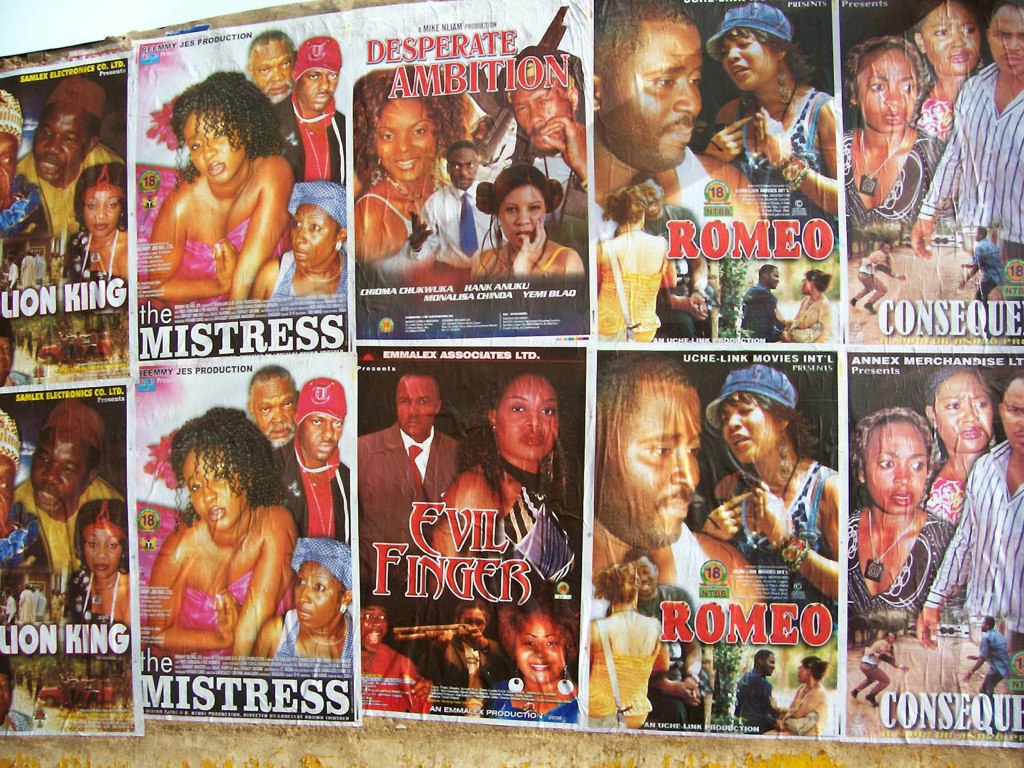
Digital Nollywood is my most sustained project, an ongoing digital archive of Nollywood film posters. I started it because these posters were either considered trash or were simply disappearing, being ephemeral objects, plastered on walls in Lagos, Ibadan, and Kano. They get covered over, torn down, weathered away, and marked as objects defacing the urban space. But they are also rich cultural texts, print transcripts that tell us how Nollywood markets itself locally, imagines its audiences, and, crucially, negotiates between local and global aesthetics. The archive I have sought to build preserves these posters, making them available for scholarship and teaching Nigerian visual culture, film, etc.
Together with colleagues at KU, particularly Brian Roseumblum, I have also co-organized an annual African Digital Humanities Symposium at the University of Kansas since 2020, bringing together scholars working at this intersection and collaborating with colleagues in West Africa on several events and initiatives. We’ve also hosted workshops on digitizing Onitsha Market Literature, mapping detention centers, exploring the possibilities and limits of using social media as historical sources and on African NLP. These symposia are about building community and creating a network of scholars who can support each other’s methodologically adventurous work.
I have done this work along with writing Cultural Netizenship (2022) and The Algorithmic Age of Personality (2025), two monographs examining digital media cultures in African literary and cultural contexts. Beyond community-building, I’m also working to create space for these conversations in major journals, currently editing a special issue on AI and Africa for ASR and previously co-edited a special issue on African Digital Humanities.
This work matters beyond African studies. If digital humanities developed its methods primarily for European manuscripts and American literary corpora, those methods need serious rethinking for the African cultural record, including oral traditions, multilingual contexts, ephemera, and platforms like TikTok where African users are reshaping digital practice itself.
Ọ̀rọ̀ láti ẹnu àwọn àgbà òṣèré Yorùbá is an oral history project documenting audio and video interviews with senior veterans of the Yorùbá film industry. These conversations preserve knowledge about early Yorùbá cinema, production practices, and cultural contexts that rarely appear in written archives. The project addresses a core methodological challenge in African DH: how do we preserve and study knowledge traditions that privilege orality over text?
 James Yékú